Poem translated: “The Prophet” by Mikhail Lermontov
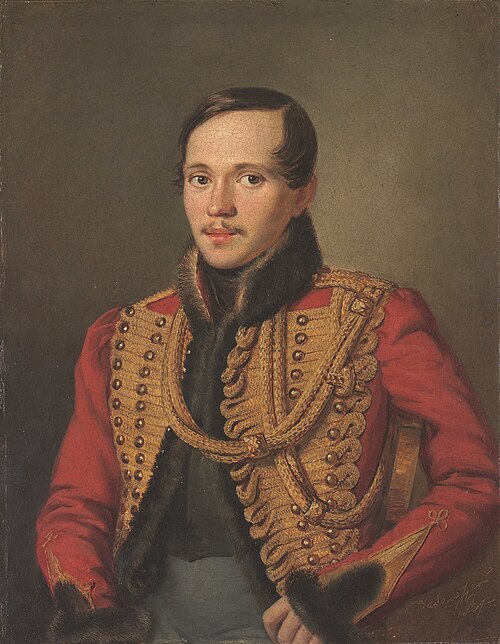
Keenly aware of his profound alienation from society and the tragic fate allotted to him, the Russian poet Mikhail Lermontov had a prophetic sense of his own destiny. His poem “The Prophet” (1841) was a response to, and a continuation of, an identically named poem by Russia’s greatest poet, Alexander Pushkin. But Lermontov’s “The Prophet” has nothing of the baroque storminess of Pushkin’s work. Instead, it is a melancholic, moving meditation on what it’s like to know no honor in one’s native realm, whether the dishonored is a biblical prophet or a great poet. In the end, the poem is as much about an Old Testament figure as it is about Lermontov – the poet who presciently described himself, in another famous poem of his, as an “undiscovered chosen one.” What follows is my own translation of the poem. The original Russian text is right below the translation.
Ever since the judge on high
Gave me a prophet’s sight,
I read in every human eye
The alphabet of sin and spite.
A noble banner I unfurled,
Of love and truth — a virtuous path;
All around me people hurled
Stones to shower me with wrath.
I heaped ashes on my head;
Impoverished, I fled my town;
A desert hermit now, I am fed
Like birds, with manna He sends down.
Embodying the eternal law,
I made all desert beings tame;
The stars above look down in awe
And bid their rays to call my name.
But when I quickly make my way
Through bustling urban spaces,
I hear the city elders say
With sanctimonious, smug faces:
“Here’s an example to behold!
This man spurned his own kind;
A fool, he was so rash and bold
To claim he knew what’s on God’s mind!
Behold: his face, so grim and pale,
His ragged clothes and sorry state!
Behold a man so poor and frail —
A man his fellow brothers hate!”
***
С тех пор как вечный судия
Мне дал всеведенье пророка,
В очах людей читаю я
Страницы злобы и порока.
Провозглашать я стал любви
И правды чистые ученья:
В меня все ближние мои
Бросали бешено каменья.
Посыпал пеплом я главу,
Из городов бежал я нищий,
И вот в пустыне я живу
Как птицы, даром божьей пищи;
Завет предвечного храня,
Мне тварь покорна там земная;
И звезды слушают меня,
Лучами радостно играя.
Когда же через шумный град
Я пробираюсь торопливо,
То старцы детям говорят
С улыбкою самолюбивой:
«Смотрите: вот пример для вас!
Он горд был, не ужился с нами:
Глупец, хотел уверить нас,
Что бог гласит его устами!
Смотрите ж, дети, на него:
Как он угрюм, и худ, и бледен!
Смотрите, как он наг и беден,
Как презирают все его!»
 The Writings of Scriptor Adorans