On the immutability of Russian history, Ivan Golovin, and Mikhail Lermontov’s poem “Farewell, Unwashed Russia”
Plus ça change, plus c’est la même chose, the French say, and the expression seems tailor-made for Russian history. Certainly a perusal of any 19th-century text about Russia written by a chronicler at a safe distance from its borders would suggest that Russian history is impregnable to change. I recently had occasion to reflect upon this immutability while reading Ivan Golovin’s 19th-century Russia Under the Autocrat Nicholas I. Golovin (1816-1890) is not a familiar name even among those familiar with 19th-century chroniclers of Russia. Partially this is explained by his falling-out with the revolutionary writer Alexander Herzen, who, in modern parlance, had Golovin subsequently canceled. But Herzen alone is not to blame. Arid and prolix, Golovin’s book lacks the lushness of the Marquis de Custine, in whose footsteps Golovin obviously followed. But where the French de Custine examined Russia with the detached eye of a foreigner, Golovin was an insider. He was born into a Russian noble family with a zest for freedom that went back a long way – the book opens with the mention of a certain Thomas Golowyn, who refused to return to the Russia of Boris Godunov from Lithuania unless the powers of the tsar were curtailed. (I was unable to ascertain whether Golovin belonged to the illustrious Golovin family; if he did, this further redounds to the benefit of Peter Turchin’s theory concerning the role of counter-elites in revolutionary movements.) Chafing as a civil servant in the foreign affairs ministry in Saint Petersburg, Golovin decamped to Paris, where he wrote a treatise on political economy. The work displeased the Russian authorities, and he was recalled to the imperial capital. Like his ancestor some two centuries before, Golovin balked, and his refusal to return resulted in a trial held in absentia and the confiscation of his wealth. It also resulted in Russia Under the Autocrat Nicholas I, a two-volume tell-all attack on Russian tsardom.
While it might be tempting to place Golovin’s work in the tradition of de Custine, as the brief introduction of the book does, he is probably closer to Alexander Radishchev, an 18th-century Russian nobleman. In 1790 Radishchev published Journey From Petersburg to Moscow, a fictionalized account of a Russian traveler aghast at the venality and dearth of freedom he sees on his way between the two cities. The book is all but unreadable today; unfortunately for Radishchev, Catherine the Great found it quite readable. Spooked by the French Revolution, the empress was not in the mood to play the enlightened despot, and Radishchev narrowly escaped capital punishment. Golovin was an ideological descendant of Radishchev – a classic liberal scandalized by the living conditions of his country and a firm believer that the Russian people deserved better. Russia Under the Autocrat Nicholas I is his own cri de coeur. Unlike Journey From Petersburg to Moscow, Golovin’s text is scholarly and meticulous; it is also much more critical since, unlike Radishchev, the French-based Golovin had nothing to lose.
Leafing through the text, the modern reader is startled by how little Russia has changed fundamentally. Then, as now, autocracy is the order of the day; then, as now, its government is defined by one-man rule; then, as now, the Russian state asserts its supremacy over the individual. Just as it is today, the country’s reputation was tarnished in the West for its cruel attempt to subjugate a neighboring nation that did not want to be a part of the empire; just as they are now, liberally minded Russians settled in the West, where they waited for the regime to croak. The core vices plaguing the Russian state today were exactly the same in Golovin’s time, and the country he describes will be painfully familiar to any modern reader following Russia from afar. Golovin’s Russia is a hotbed of kleptocracy, which he calls one of the hallmarks of the Russian state. The quickest way to strike it rich in tsarist Russia is to work for the government: all civil servants, no matter how low- or high-placed, make it their business to steal, openly and with impunity; from hospital medications to military supplies, everything is fair game. Golovin talks about police chiefs who have their own houses and governors who possess their own hotels; corruption is so endemic that even the tsar is powerless to do anything about it and, according to Golovin, he can only thank his good fortune that his own is not being pilfered. The legal system is a joke, “as elastic as the conscience of the judges” – laws, such as they are, are passed based on royal caprice and applied retroactively, while “justice” is applied by kangaroo courts in the service of the highest bidder. The ministers at the helm of the state are, for the most part, sycophantic nincompoops, ineffectual at best and malignant at worst.
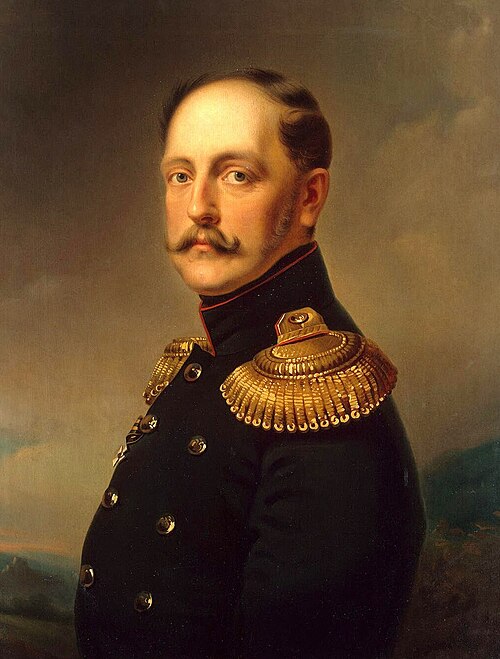
Golovin rejects the idea that Russia’s problems can be imputed to something deep-seated in the Russian character – no nation on earth has a monopoly on the notion of human dignity. The cause of Russia’s woes is its government, and its government is the tsar. L’État, c’est moi, the Sun King supposedly said; reading Golovin, one wonders whether it wasn’t a Russian tsar who said it. Russia, Golovin writes, exists solely for the pleasure of its tsar. The Russian monarch is at the heart of the country and its raison d’être; the law provides for the tsar’s unlimited powers and even for the tsar’s divine backing. The tsar determines what Russian subjects wear and what they have for breakfast. To be cuckolded by the tsar is to solicit envy from the court; to be called an “imbecile” by him is to possess a mark of distinction. There is nothing the tsar can’t do; he even “makes and unmakes saints.” He is on an equal footing with God; the churches pray for him more than they do for Christ, and if Russian legislation guarantees freedom of religion, it is only to ensure that all Russian subjects can pray for their tsar, whatever their faith. The result is the conflation of God with the tsar and the tsar’s deification. The tsar in question, Golovin’s bête noire, is Nicholas I, a steely, handsome autocrat permanently traumatized by the Decembrist Revolt and utterly deficient in qualities that befit an enlightened monarch.
Russia’s tsarist regime has a most baleful effect on its people: it enslaves them. This is both literal (serfdom) and spiritual, since it makes even those Russian subjects who are theoretically free and endowed with rights (that is, the nobility) obsequious and servile. This deforms the national character. Liberalism becomes impossible; liberal ideas are widely mistrusted, and Golovin notes that Russian liberals are mostly malcontents (Turchin’s disgruntled counter-elites?). On the other hand, violence acquires a quotidian, prosaic character. Russians, Golovin claims, have a mania for beating, something they acquire from their mothers’ milk. The humiliation of having to toady up to a higher rank is taken out on someone below, and of course it is the weak and defenseless at the bottom of the pyramid who suffer the most – women and equines. The peasant, who suffers blows from everyone, has no one else to beat except his wife and his horse. In tsarist Russia physical violence is institutional; the use of corporal punishment is enshrined in the penal code. Golovin describes the first incident he witnessed upon returning to Russia from abroad: his postilion struck a peasant walking peacefully along the road with a whip, for no good reason, reminding Golovin that Russia was still very much “the country of the knout.”
One wouldn’t know it from his text, but Golovin himself may have exemplified the worst aspects of tsarist Russia. In his memoir My Past and Thoughts, a book Isaiah Berlin called one of the masterpieces of 19th-century Russian literature, Herzen devotes some ten pages to Golovin, and they don’t make for a pleasant read. Golovin comes across as a toxic character, histrionic and litigious, and all-around bad news. Herzen recalls watching Golovin amuse himself by throwing coins at a street urchin in Turin and whipping the boy every time a coin was thrown. The introduction to Golovin’s text mentions Herzen might have had his own reasons for blackening Golovin’s name; supposedly, Golovin may have been the one who uncovered Herzen’s wife’s infidelity, earning Herzen’s implacable hatred. Perhaps, but even if half of what Herzen has to say about Golovin is accurate, the portrait is highly unflattering. It doesn’t help that Golovin gets carried away in his own book. His description of Russia sometimes borders on the caricatural, and one might well wonder how a country so dysfunctional and governed by a class so inept could have become a major power broker in 19th-century Europe. There are instances of bad taste, as when Golovin claims that no other country can boast of as many ugly women and so few pretty ones as Russia – as if an opinion so graceless and subjective can be laid at the door of the country’s ruler. Nor is one entirely persuaded by Golovin’s presentation of tsarist brutality. Whatever the faults of tsarist despotism, they pale in comparison with the violence of the revolutionaries who toppled tsarism and with the horrors of Stalinism. In tsarist Russia, Golovin had his property confiscated and declared persona non grata; nowadays he would be done away with using frog poison.
Yet, for all that, Golovin is, sadly, all too believable. We need only apply to Russian literature to see pictures of Golovin’s Russia. The Russian piety he describes, having witnessed a thief slide his hand into someone’s pocket while making the sign of the cross with the other as a church bell pealed, is almost straight out of Dostoevsky. One is stunned by the casualness, the senselessness, of violence as told by some of the greatest Russian authors, violence usually perpetrated against those least able to defend themselves, children and animals especially. In “In the Ravine,” a short story by Chekhov, a woman douses the child of another woman with boiling water; when the grieving mother tells a passerby her child has died, the old man shakes his head and mutters something about divine will. In Turgenev’s “Mumu,” a serf who is dead and mute is forced to drown his dog. In a Zamyatin short story, “The Land Surveyor,” a bunch of villagers (likely former serfs) capture a dog that belongs to the woman who once owned the estate and throw it in a bucket full of green paint; the dog goes blind and dies by the day’s end. You don’t typically find this sort of thing in Western literature. Beyond the realm of fiction, one finds poems such as the one below, written by the Russian poet Nekrasov and included in a letter to a friend (the translation is mine):
After leaving Königsberg,
I finally approached the land
Where no one fancies Gutenberg,
Where only shit is in demand.
I downed some Russian swill
And heard “Oh fucking hell!”
As Russian mugs began to mill
About me drunkenly, pell-mell.
Nor do we need to consult Russian literature; a look at current events is sufficient. Russia is now a federation, and its president couldn’t be more unlike Nicholas I; for all intents and purposes, though, Putin is still the latter-day tsar. De Tocqueville wrote that between the two types of slavery – the one that existed in Russia and the one in America – the second one was more pernicious: since it relied on visible racial categories, its legacy would endure beyond the abrogation of slavery. While this is judicious, the Russian type of slavery could not have failed to leave permanent scars that, compounded by Stalin’s gulags, might explain why Russia’s attachment to autocracy seems so durable. The economic paradigm has changed – writing about Putin’s Russia today, Golovin would have to devote an entire chapter to its oil industry – but the “Putin vertical” is essentially a modern iteration of the tsarist hierarchy. Uvarov’s triune ideology (Orthodoxy, Autocracy, and Nationality), formulated under Nicholas I, is alive and well. So is censorship – try watching a video by a prominent Youtuber who, as a Russian citizen, vocally opposes Putin’s government, and you’ll be greeted by a black screen informing you the video was made by a “foreign agent,” a designation made for anyone who disagrees with Putin’s conception of the Russian state, particularly as regards the war against Ukraine. As for war, there are important parallels between then and now. Golovin mentions Russia’s imperial designs and its mistreatment of Poland. Poland had been partitioned several times by Russia, Prussia, and Austria, and Russia viciously suppressed Polish attempts to achieve autonomy in the 19th century, which led to widespread condemnation of Russia in Europe. Ukraine is today’s Poland, a land unlucky enough to be considered as Russia’s backyard by its current ruler. Curiously, Golovin observes that, having been part of the Polish-Lithuanian Commonwealth, Ukraine (“Little Russia,” as Golovin calls it, following contemporary conventions) was spared the kind of servitude imposed on Russia by the Mongol invasion, thus reinforcing Ukraine’s claims to a civilizational identity distinct from that of Russia.
Golovin mentions a Russian saying that Russia ought to be ruled with an iron hand but that the hand ought to be gloved. The problem, Golovin adds, is that Nicholas I forgot to put the glove on. Though he may still be alive, history has already condemned him and his tyranny. Although Golovin, who died indigent and forgotten by all, lived long enough to see the emancipation of the serfs and the assassination of the tsar who had emancipated them, he would have had to live for an additional quarter of a century or so to see the collapse of the tsardom. When he wrote his book, he saw no possibility of revolution in the next several decades, even if he did allow for deus ex machina. Still, on any reasonable reading of Golovin’s book, the inevitability of the Russian Revolution is obvious. As early as 1790, Radishchev prophesied that Russia’s elites had it coming to them, and in the end he was right. The court of history does not entertain appeals – a sobering truth for any modern autocrat who has forgotten to put on a glove.
The only part worth reading in the otherwise tedious second volume of Golovin’s book is the chapter about Russia’s literature. It is an excellent reminder of the risk of passing judgment on the achievements of an epoch before the owl of Minerva has spread her wings – before the period in question is actually over. While acknowledging the genius of Pushkin and several other writers such as Griboyedov, Golovin deplores the paucity of serious Russian literature. He claims Russian writers have not yet produced a literary work that will stand the test of time, contemporary Russian authors will have been all but forgotten a century henceforth, and Russia lacks a single serious classic. While he was right to say that the Russian literature of his time was fledgling, and that Russia lacked a Montesquieu, a Hume, or a Patrizi, he had no idea he was living through the golden age of Russian literature. Inevitably he also didn’t realize that tsarist despotism was the impetus for Russia’s golden age of literature – in a country that did not tolerate liberty of freedom, literature was the only channel for public discourse. As Golovin held forth about the primitiveness of Russian literature (1846), Dostoevsky had already written Poor Folk and, along with Tolstoy and Turgenev, would go on to produce some of the greatest literary masterpieces of Western civilization in the ensuing decades. By the time Golovin had published his book, Gogol’s Dead Souls and Pushkin’s Eugene Onegin were available to the reading public; both works remain an integral part of the literary canon.
Another great work of fiction that had already been published was Mikhail Lermontov’s novel A Hero of Our Time. Golovin mentions Lermontov en passant, in connection with his exile to the Caucasus. It would be a stretch to describe Lermontov as a dissident; like many great poets, he was an internal exile, and he would have felt out of place in other countries too. But he happened to be a product of tsarist Russia, and that was the fate with which he had to contend. Just before he was sent packing south, he wrote a poem called “Farewell, Unwashed Russia.” The poem is believed to have been written circa 1841, and there has been some controversy concerning its attribution to Lermontov, although the consensus is that Lermontov is the poem’s true author. Regardless, this is a poem one thinks about while reading Golovin, Herzen, or Radishchev. Below is my own translation of the poem, followed by the original Russian text.
Farewell, you unwashed Rus of mire,
The land of masters and their slaves;
Farewell, gendarmes in blue attire
And you, a nation that slavery craves.
Perhaps Caucasian summits rising high
Will hide me from your padishas,
From their all-seeing gimlet eye,
From their all-hearing ears and laws.
#
Прощай, немытая Россия,
Страна рабов, страна господ,
И вы, мундиры голубые,
И ты, им преданный народ.
Быть может, за стеной Кавказа
Укроюсь от твоих пашей,
От их всевидящего глаза,
От их всеслышащих ушей.
 The Writings of Scriptor Adorans